Archive for category Chisels

Chisels: 1, Thagomizer: 0

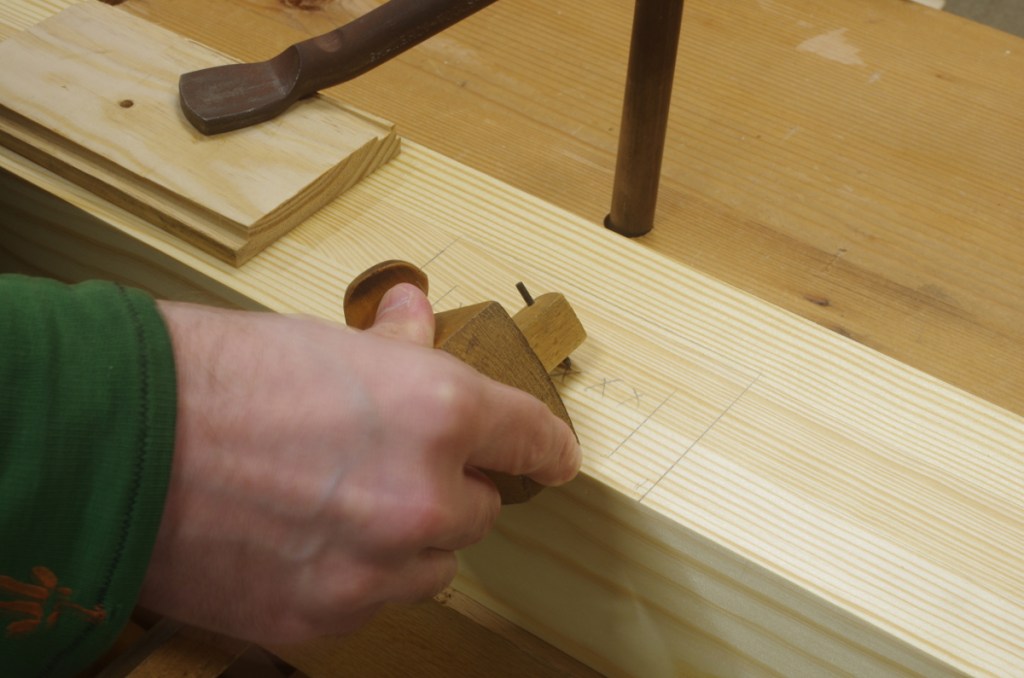
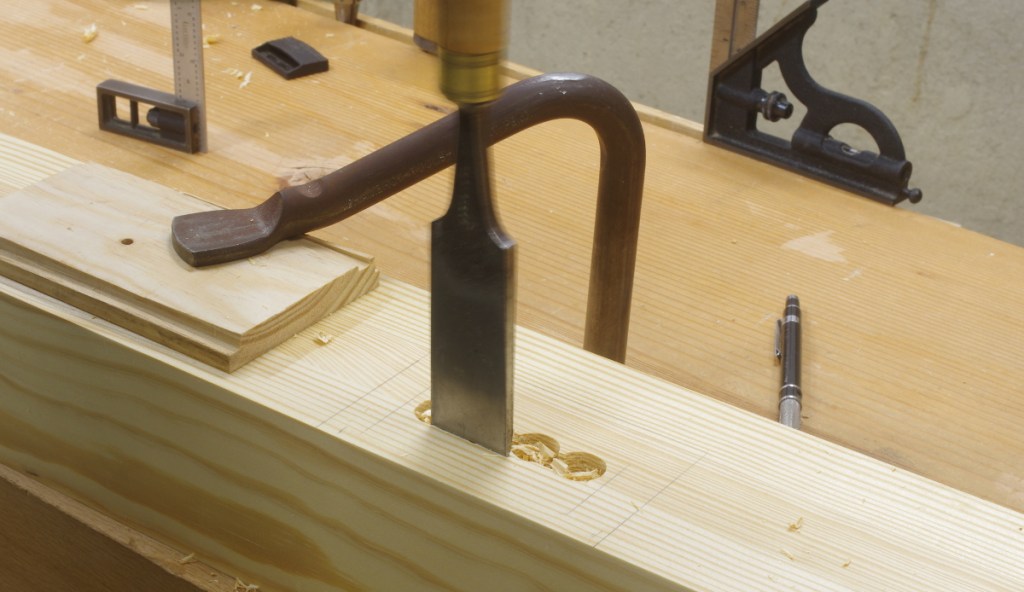
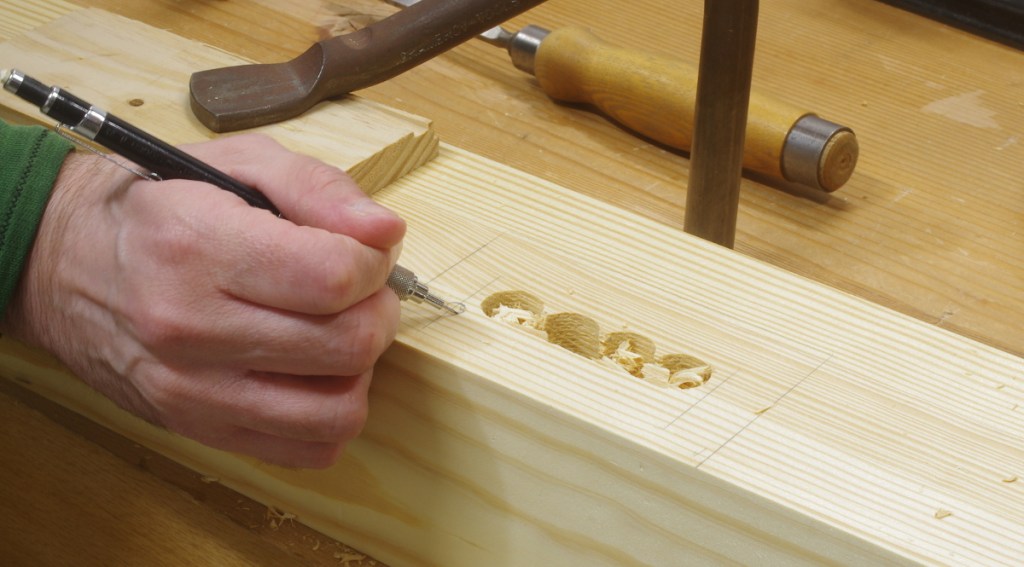
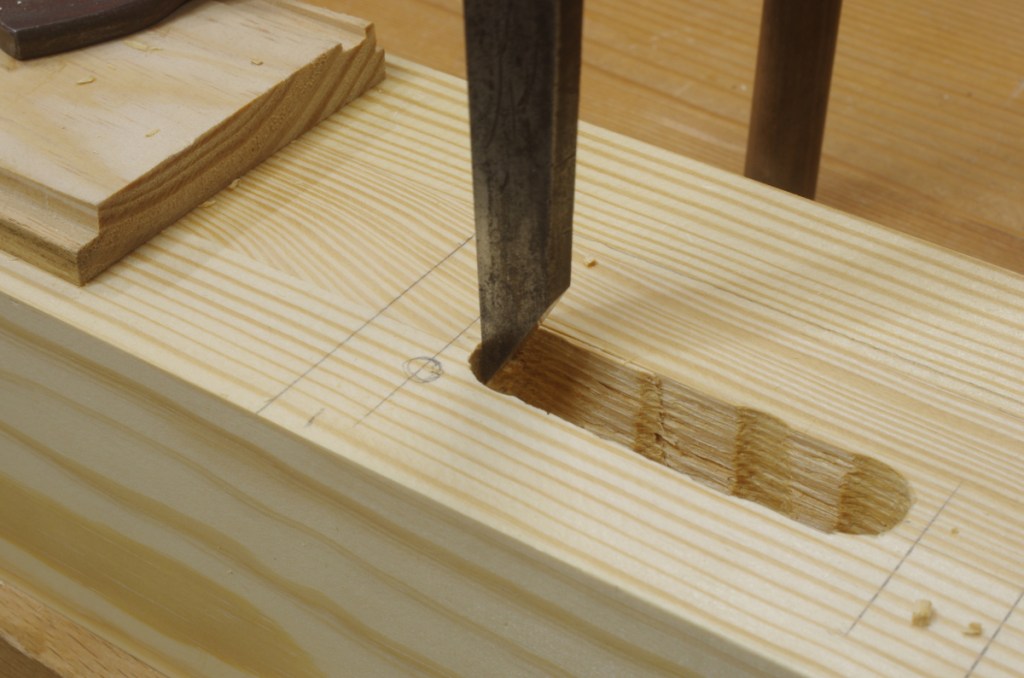
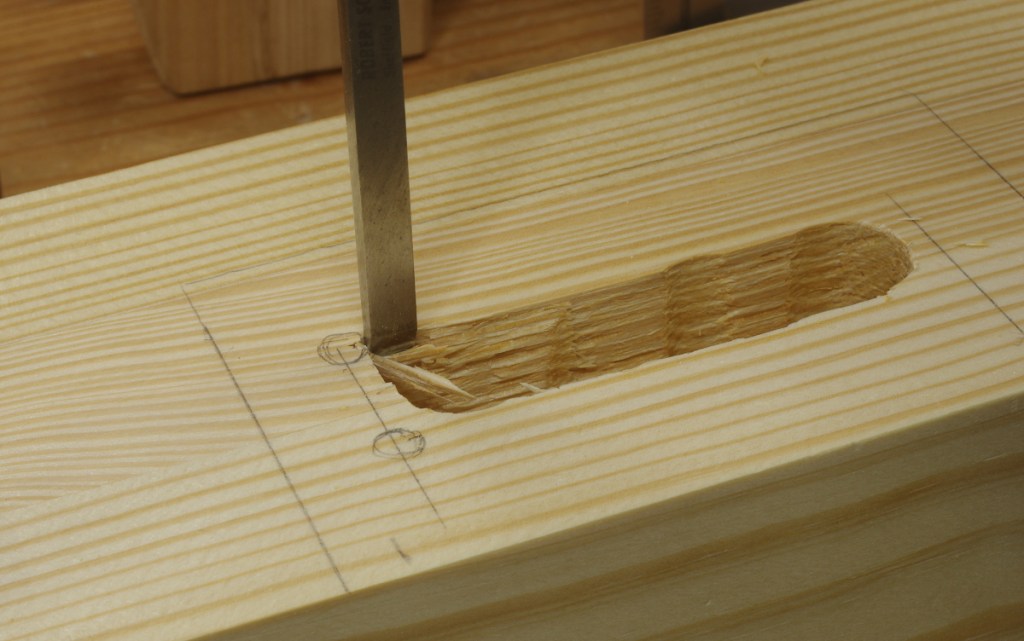
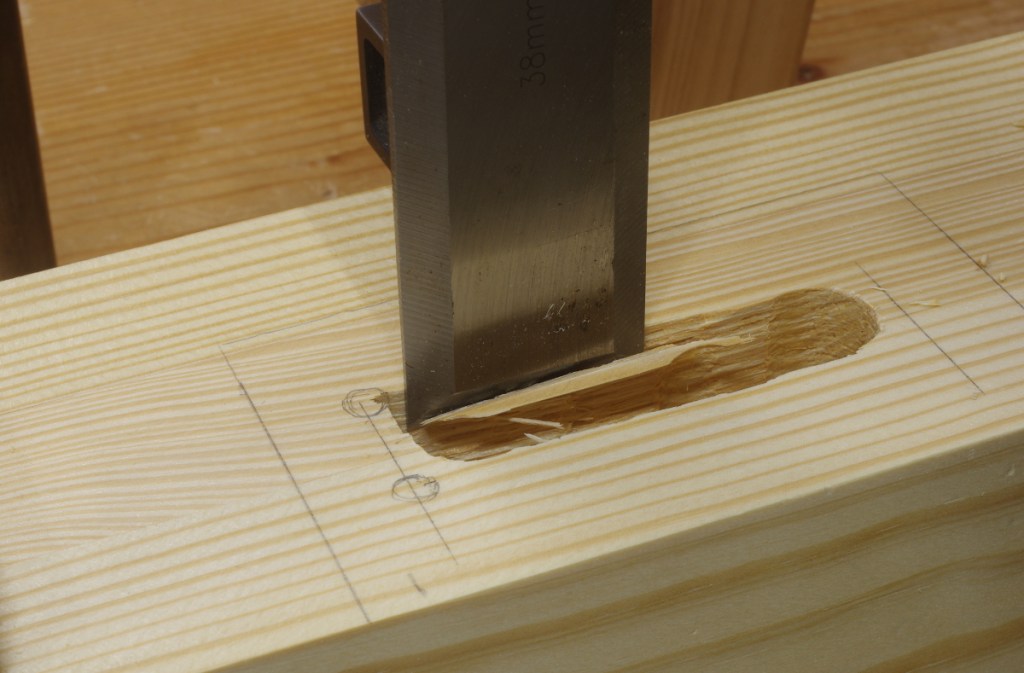
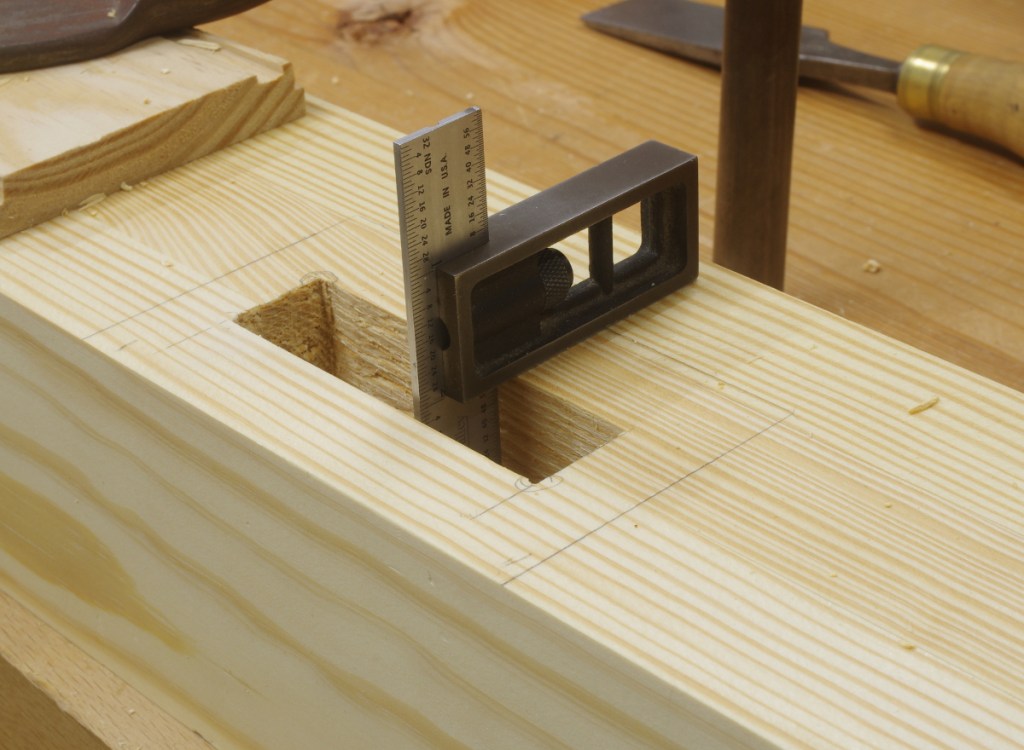
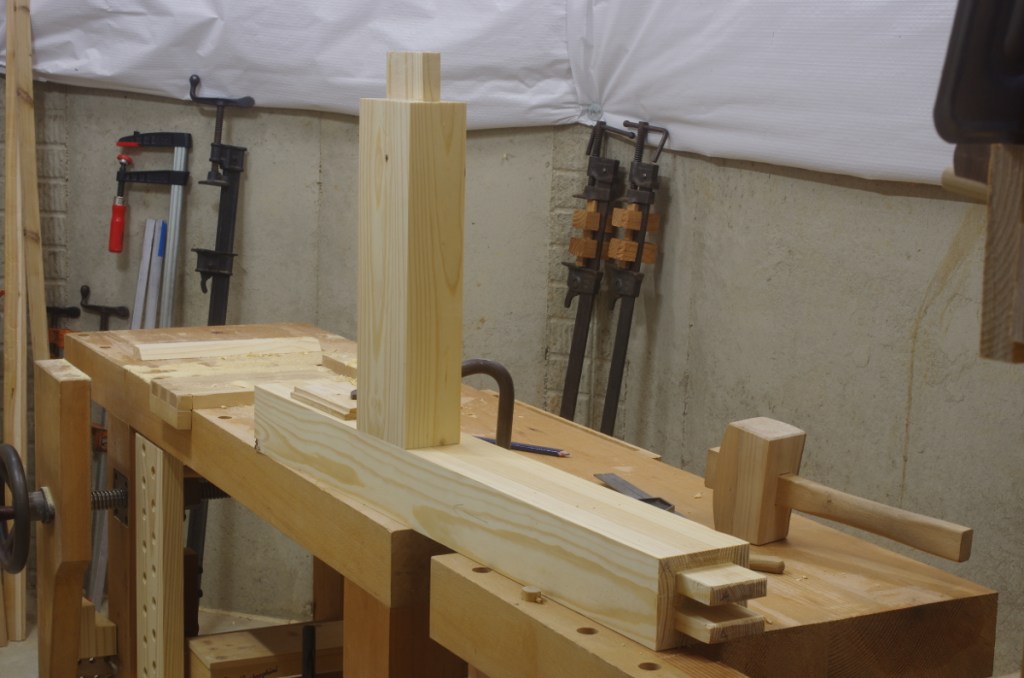
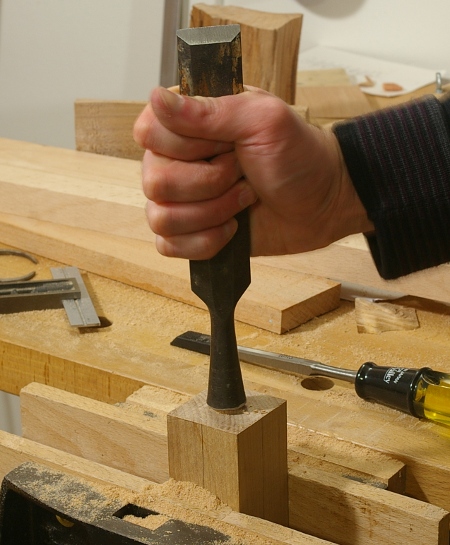
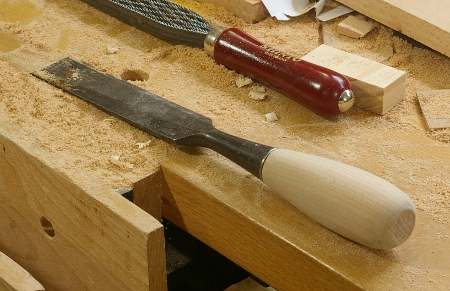
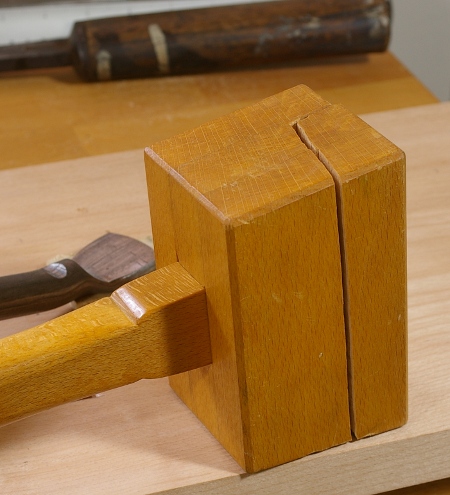
There I was, thumping away at a mortise in the stool top. Whap whap WHAP, hey, something just got funny. Remember how I hinted that the Ash chisel handle might bite it? Well, it turns out that the chisel made a pre-emptive strike (notice the perpetrator lurking in the background here):

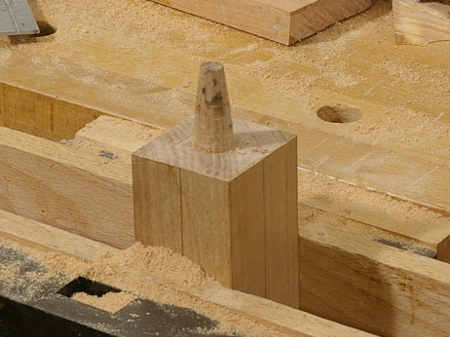
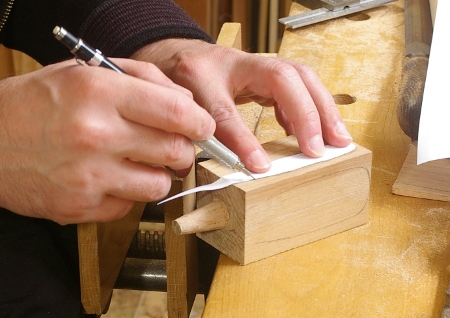
A totally predictable failure pattern, I suppose. I did the only natural thing here and glued it back together:

I don’t know how long this repair is going to last. In theory, it should be okay if I manage to strike in the center of the mallet, but then again, the ultimate reason that this happened was because I didn’t hit the chisel handle in the center.

There’s a lesson to be learned here. Maybe one or more of these will help in the future:

  • A bigger mallet for bigger jobs like this. [note: see Joel's comment below on why this may not be the greatest of ideas]
  • Strike in the center.
  • Make the mallet out of wood with an interlocked grain.
  • Not hit the chisel so hard.

Tags: ,

Restoring an Ash Mortise Chisel

To make the joinery in the stool project, I’m going to need a fatter mortise chisel than my W. Butcher “pigsticker.” Fortunately, while trolling eBay a while back, bidding cheaply on every pigsticker I saw (and losing all of them), I managed to pick up two for about $13 each. When the dust cleared, I had a 3/8″ William Ash and a 7/16″ Samuel Newbould. Both needed work to get back into usable shape, but at least I didn’t have to make a handle for either.

For whatever reason, I picked the Ash to restore now, which had a lot of rust. In retrospect, I have no idea why. The Newbould doesn’t have much rust, but it does have some pitting near the tip, as does the Ash. And of course, that’s the worst part, right? So no problem with the slightly smaller chisel, right?

Well, that is, unless that one has a tip that is about as sharp as a blunt screwdriver, which is exactly what the Ash had. But I’m pretty hardheaded, so I resolved to reshape the bevel. However, even though this type of chisel is laminated and most of the metal is pretty soft, the cutting edge is always ridiculously hard. I didn’t want to spend years trying to muscle that off. For salvation, I turned to…

The world’s most horrible grinder.

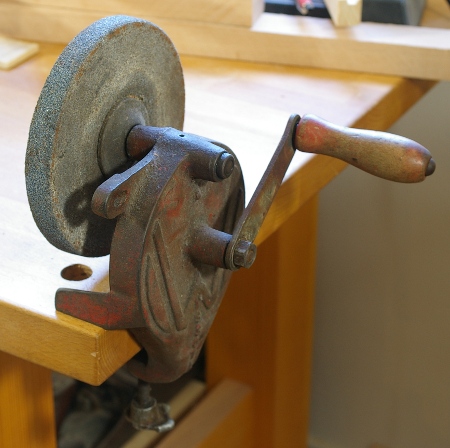
Hand-crank grinders look cute and all, but I bought this Wissota thing for about 50 cents a long time ago, and after fiddling around for a long time trying to make it turn even halfway reasonably, I put it aside. Some of its many features include:

  • Grotesquely misshapen, hot-burnin’ wheel
  • Mismatched bushing/arbor
  • Missing tool rest (although this might not be such a bad thing)
  • Bent crank handle
  • Frozen nuts
  • Broken clamp knob

But for whatever reason, instead of going out and getting something reasonable, I put it on the bench and started fooling around with it. I managed to get the nuts turning, and when I tightened everything up and turned the crank, it started spinning with a groan. For lack of a better idea, I squirted a little WD-40 into the oil hole, and to my surprise, the noise went away and it turned freely.

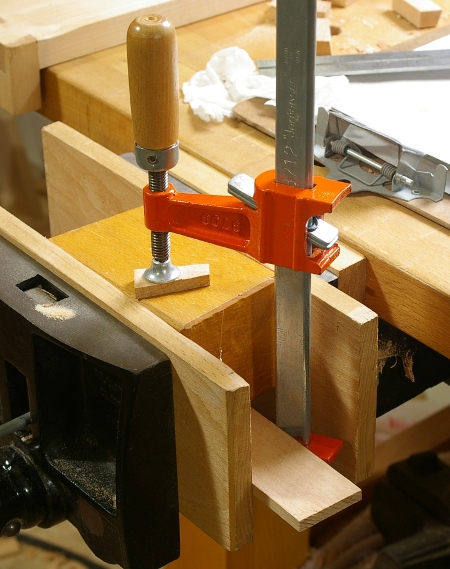
So I put on the safety glasses, got a jar of water for cooling the blade, and went to work, using a clamped board as a tool rest. This worked well enough (gotta love those high-carbon steel sparks), and before long, I had an actual bevel on the blade. Whee.

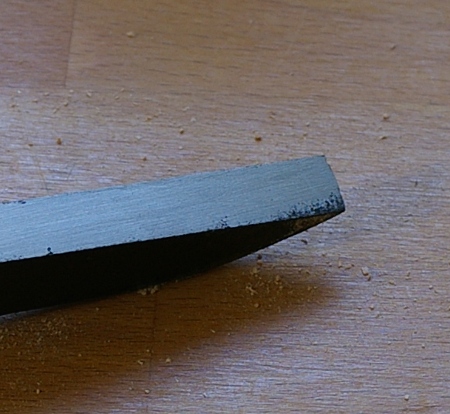
Then I turned my attention to the chisel’s face. There was a lot of pitting near the tip on this one after some flattening:

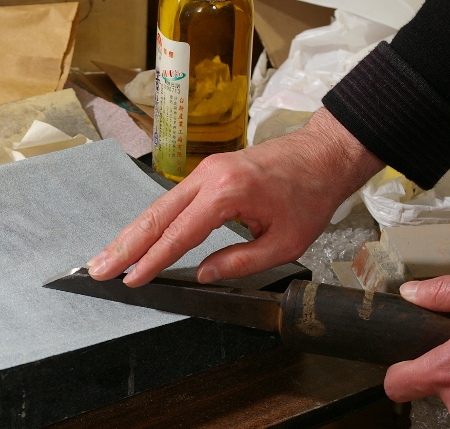
Oh, how I hate dealing with this mess. It was off to the surface plate and the 3X sandpaper to fix this problem:

The sandpaper doesn’t stay aggressive on this steel for very long. After switching sandpaper about 5 times (note to self: get some 60-grit paper next time), I had finally gotten through the pitting, so I finished smoothing the face, then turned my attention to the bevel side.

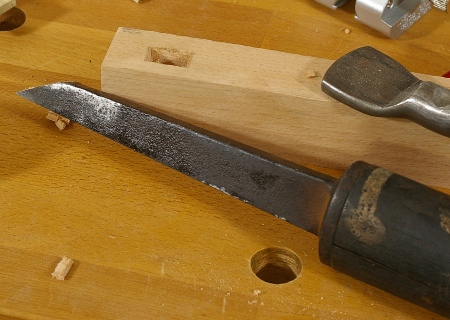
I started with an Eclipse-style honing guide at first, but this chisel is just too heavy for that, so I just did it freehand. This worked well, and before long, I had a sharp chisel. But it’s not truly sharp until you use it to make sure, so I did just that on some beech:

Yeah, I’d say it works. I might remove some of that black oxidation on the sides at some point, but for now, I don’t think I need to. Anyone want to take bets on how long the handle will last?

One question remains: What will become of the world’s most horrible grinder? I might be able to make it work reasonably well with a decent wheel and a little tuning. Or should I get a new one? Grinders are useful things, no doubt about it; I just hadn’t really needed to bother with one until now.

Tags:

Taiwan: Final Tool Survey

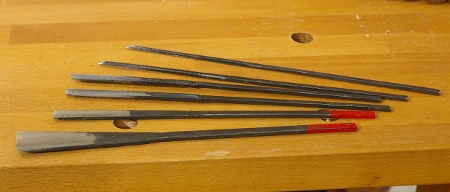
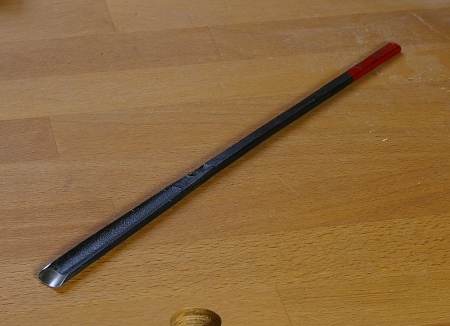
Here’s an inchannel gouge I got in Taipei. This is how all of the “local” carving tools there I saw were designed:

taiwanese_gouge

It’s fairly long, maybe about 9″ or so. But that’s not the first thing you notice about it–the lack of a handle is. They typically aren’t used without mallets.

These things are struck with a long, rectangular mallet made of a single piece of wood. They are somewhere around 2x2x9″, with one end rounded so that it’s comfortable. Due to the small hard area that they hit, the mallets quickly form concavities on their faces. So soon after you start using a new mallet, it tends not to slip.

Although it looks cheap, this gouge was not particularly cheap. The red at the end means that it’s made with “quality steel,” and I think the cost was about $8. I’ve tried it out and it works fine, but I think I’d prefer to make an appropriate mallet before doing too much with it.

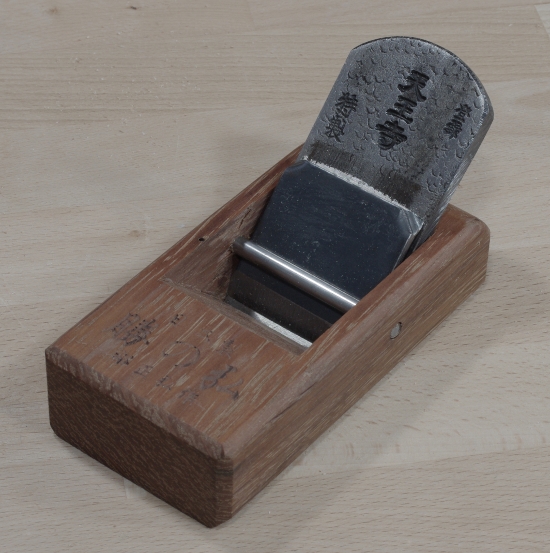
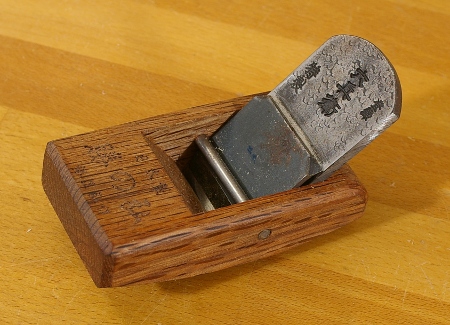
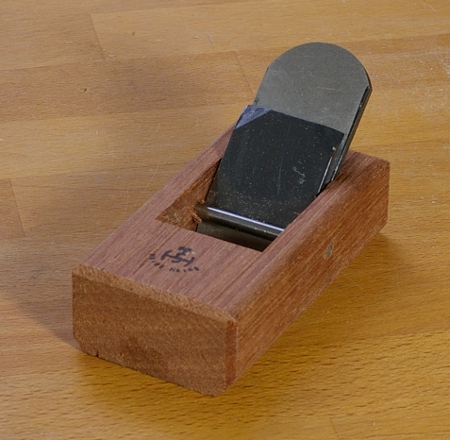
The plane below is a little block-esque plane made by “Hsieh Hsing:”

tw_block_1

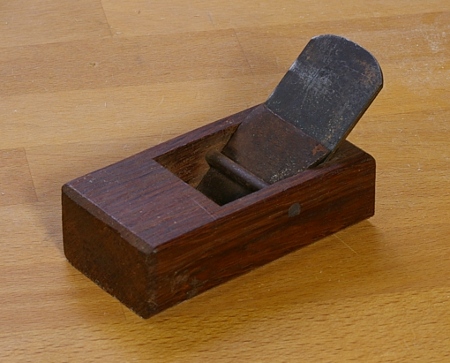
This one actually came with packaging, which advertised it as “Japanese-style,” despite the fact that it’s no different than any Taiwanese plane I’ve seen. It’s short (maybe about 4″ long), and has a thick, quality blade that was very easy to flatten. Its throat is rather wide open, which lends it to uses of more rough block plane, but it does a good job and I can’t complain about that.

The final Taiwanese tool I’ll describe is a little special due to the person who gave it to me. One of the reasons for this whole trip was to meet my future inlaws, and as scary as that may sound, it turns out that they were all really great. One uncle in particular is also interested in building stuff, so I showed him this blog and we talked a bit on the subject. He’s also the one who took me to the store where I got most of these tools; it would have been difficult to find without him. And finally, he gave me this little smoothing plane:

agus_plane

Thanks, Uncle!

I think I’m finally mostly caught up with updates from the trip, so it’s time to get focused back on my various projects; I’ve already got some stuff started and can’t wait to get back to business on that. I’ll have some updates shortly. In the meantime, enjoy this view from Mugumuyu near Hualien (those rocks are marble):

mugumuyu_pool

Tags:

Somewhat Interesting Uninteresting Chisel

When tool-hunting in Taiwan, I expected that I’d find a few western tools with mostly Asian-style ones. The reality for most places was a pile of power tools that look the same everywhere, but we generally don’t do that kind of naughty talk around here.

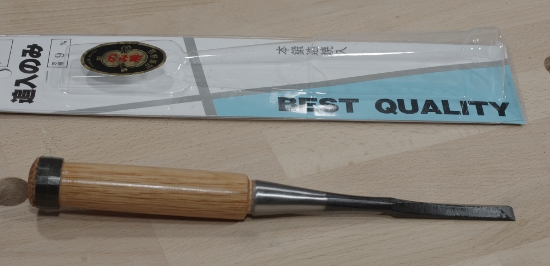
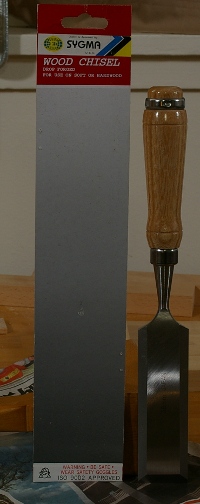
I’ll start with what is likely the most uninteresting of the lot. One of the larger tool/hardware shops in Taipei had a western chisel that I felt compelled to buy because there were a lot of things about it that seemed strange to me. (That it cost a little less than $10 didn’t hurt, either.)

What first caught my eye were:

  • Made in Japan.
  • Wooden handle. Seems like some sort of ring-porous thing like ash or hickory, with medium-sized pores.
  • Wide (I didn’t have anything 1.5″ wide).

Well, when I got it home, there were a few more things that I noticed:

  • Unknown manufacturer. The backing card (see below) says “Quality is Approved by Sygma U.S.A.,” but I have no idea what this means. Searches have returned no results for a manufacturer of that name here. It might be an ISO certification company or something, because it says ISO 9002 at the bottom. Or it just may be completely made up.
  • No UPC code that I can see.
  • Hooped handle, which is very much like the Japanese style.
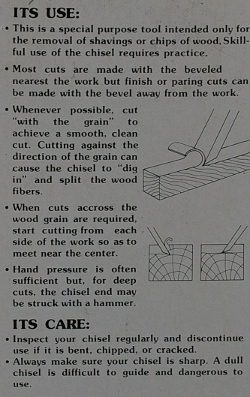
  • Instructions on the back of the card (see below) are actually halfway decent (“A dull chisel is difficult to guide and dangerous to use”).

And then I sharpened it last night. The grinding was really good–it took only a couple of minutes to flatten the face, and there is a perfect little hollow in the center that starts about a centimeter from the edge. There were no jaggies. Once honed, it easily pared shavings off of Douglas-fir endgrain and didn’t seem to lose its edge, but only time will tell to see how good this steel is.

So here are the pics. If anyone’s ever seen one of these before…

mystery_chiselmystery_chisel_instructions

Silly Honing Guide Tricks

After finishing off those last two projects, I had some time to clean and rearrange stuff in the shop, and as I was doing so, I couldn’t help myself from sharpening up a nice old W. Butcher chisel I got off of eBay a while back. I decided that I needed to reshape the bevel, so I put some Norton 3X on the surface plate and set up my Lee Valley/Veritas Mk. 2 honing guide. (I sharpen freehand for the most part now, but for shaping, I use the guide.)

As I was going to work, the blade did something that it sometimes does in the guide–it slipped and rotated out of square. This has been my only major gripe with the guide, and it’s going to happen with any top-clamping guide, especially with the narrower blades.

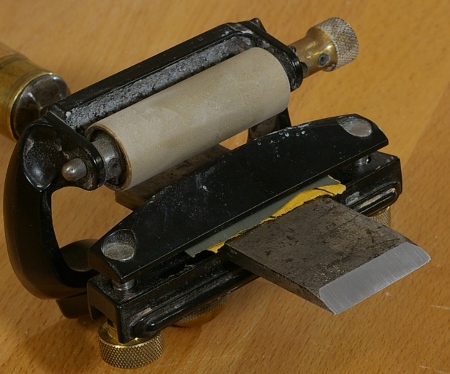
Then I thought of a way to make it stop, maybe. I took a small piece of very fine grit sandpaper (1500 in this case), folded it, and put it between the blade and the guide on the bevel side, where it wouldn’t affect the bevel angle:

honing_guide_trick

And it no longer slipped around. Someone else has probably thought of this fix, too, they’ve had to.

(For the record, my only other gripe with the guide, a minor one, is that the knurled knobs are sometimes difficult to loosen. I’d kind of prefer something more like a wingnut.)

Tags:

Mortise chisel: Part 2

I marked out the angles on the mortise chisel by “feel,” just by sort of looking at all of the pictures I’ve seen and guessing. With two sides cut away, it looked like this:

I cut out these sections with my larger rip saw. It would have taken forever with anything else. Then I used a block plane to smooth around the oval. I nicked the blade of the plane against the chisel bolster doing that. Boo. Grinding that stuff out is always such a pain.

Following the plane, I used a spokeshave to further smooth the oval shape, then, finally, progressive grits of sandpaper on a block to do the final smoothing. This sequence was quick.

A couple of oil/varnish blend applications later, along with the requisite sharpening, it was ready to use. Here it is with its first test mortise-and-tenon joint (upper left, not that stuff to the right):

It’s a lot of fun to use. Best of all, it’s fast.

Tags:

Mortise chisel handle: Part 1

I’ve been jonesing for a “real” mortise chisel for a long time now. My obstacle, however, has been the irrational cheapskate inside of me. There’s been a lot written about the English “pigsticker” style of mortise chisel lately, and I’ve been trolling ebay for a cheap one or one without a handle. I finally got my hands on a handle-free sample a couple of weeks ago.

Made by W. Butcher, it has a strange width–something like 9/32″. This is close enough to 1/4″, I guess. Its cutting edge is laminated to a softer metal for the rest of the blade.

Unfortunately, it was dubbed at the tip when I got it, and it was a lot of work to flatten the back (I took the dubbing problem from both ends; shortened it slightly and flattened the rest off). You would think something that small would be easier to flatten, but the steel is really quite hard. I used Norton 3X sandpaper on a granite surface plate, grits 80 on up.
After doing this task, I set out to make a new handle per Derek Cohen’s instructions. Putting in the hole for the tang was a real pain in the ass:

The wood is yellow birch. We’ll see if it holds up. Next step is to shape it, then finish sharpening the blade.

Tags:

First Waterstones

My waterstones arrived today. They are 800x and 4000x.

Of course, I was very eager to try them out. Goodness, what a difference. I flattened a plane blade back, and that took a little bit of time, but once flat on the 800x, the 4000x did its job with amazing speed.

Then I honed the bevel–in just a few minutes. But the real surprise came when I did the final hone with the green compound on wood. I knew that the edge was pretty sharp, but it didn’t look too shiny. Well, the green compound made the blade shine like nothing I’ve ever done before.

Well, that’s all fine and good. And I did shave off the requisite arm hair. But I really wanted to see how the blade worked, so I put that bad boy back into its type 4 Millers Falls smoothing plane, clamped in a yellow-poplar board, and set the blade for a very fine cut.

Holy crap. Now, granted, I’d been fiddling around with this plane recently, but I did not expect so see shavings so consistent and thin. The blade zipped through like it was almost nothing and left my best surface yet. Even on the part of the board where the grain reversed direction!

I guess it’s so long for Scary Sharp for me–it was a nice cheap way to get started, but even though waterstones are slightly messy, the speed, ease, and consistency of results are really hard to deny.

[edit: I still use sandpaper (Norton 3X, then grit progressions) on a surface plate to initially flatten faces of tools. It's faster and less error-prone because you don't have to worry about keeping a stone flat. But I always turn to my waterstones for final sharpening, and I generally don't use the sandpaper after the initial flattening.]

First honing

So I had my first attempt at honing today. My 3/4″ chisel was my first victim of the Scary Sharp system. I was a bit nervous about it because, well, this was it, you know… the last thing that I needed to do in order to have a usable tool. That, and I’d been reading about how to sharpen stuff for a long time.

It actually worked. I used a variety of sandpaper grits with repositionable spray adhesive on glass. I learned the following:

- Don’t use too much adhesive. Just a little bit makes the sandpaper stick and keeps it from sliding around. Too much makes it goopy and slippery. Repositionable is great because you can clean it with citrus cleaner.
- Lapping the back of a blade is the hardest part and takes a long time. Thank goodness you really only have to do this once. I need some more sandpaper grits to do this more quickly; it took me a long time to work out the original milling marks and skip between the various grits.
- Corollary: It’s gonna take forever to lap the soles of my planes.
- Honing the bevel is pretty fast and easy, especially when you have a honing guide.
- A mirror finish on a blade makes things really, really interesting.
- It’s pretty easy to tell if you’ve done it right. You really can shave your arm hair, and a sharp blade cuts across endgrain with the greatest of ease.
- Despite being able to do the above, I still need practice.
- I need a real strop.

I still need more practice. But the today’s results are much better than I expected.

Chisels: Check.

The chisel problem had been weighing hard and fast on my mind, and today I did something about it. After picking my car up from its regular service, I remembered that there was one of those Woodcraft stores in San Carlos, which is relatively close to the mechanic. Having that convenient mode of transport ready, I went there to see if they had any new chisels that were okay and didn’t cost like a million dollars. Also, I’d never been to one of those stores before, and I was kind of curious to see stuff like the Lie-Nielsen planes.

So I asked the guy there about the chisels. He was really helpful. He understood exactly what I was trying to do, and basically said, “Yeah, we have a lot of really spendy chisels, but these plastic-handled Irwin/Marples ones that are much cheaper and available in this handy four-pack will be great for what you’re trying to do. You just gotta put the time and effort into honing and learning how to use them. Then, when you are good at that, and properly addicted, come on back, purchase the really expensive stuff, and take lots of classes ‘cuz you’ll like that.”

I paraphrase, of course, but I have to admit that it was rather refreshing that the guy wasn’t trying to sell me the most expensive thing in the store. This might be partly because there is no shortage of Yuppie Bastard (and his silly German car) in the bay area, and therefore, no shortage of chumps throwing money around like candy at a parade. He asked me if there was anything else I needed, and I told him that maybe my small try square might not be very useful, but he said, “Nah, it may be a little small, but for now, it’ll be fine; sometime later you might need something bigger.” Odd, all of this, but it definitely means that I’ll probably go back there on similar occasions.

Anyway, the store definitely has some drool appeal. Those Lie-Nielsen planes sure do look nice, but, uh…